Choosing the Right Nails for Different Horse Shoeing Needs
When people think about horse shoeing, the horseshoe itself is usually the first thing that comes to mind. The shape, material and style of the shoe can all affect how a horse moves and how well the hoof is protected.
But there is another small component that deserves just as much attention: the nail.
A horseshoe cannot do its job if it is not properly secured. The nail needs to work with the shoe, the hoof and the particular application. For professional farriers, selecting the right nail is part of the everyday decision-making involved in providing appropriate hoof care.
For horse owners and people learning more about farriery, understanding the basics can also make the equipment side of hoof care much easier to navigate.
Why nail selection matters
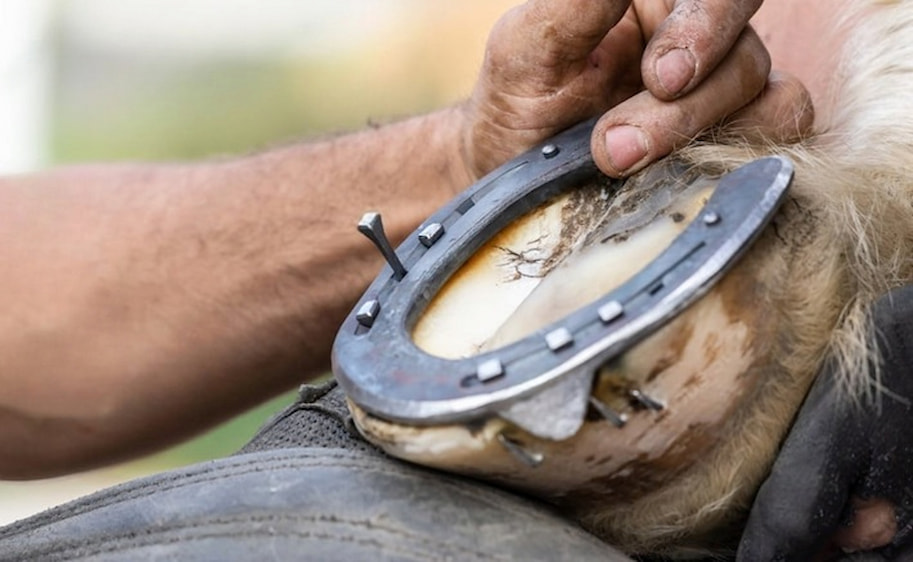
A horseshoe nail is specifically designed to secure a horseshoe to the hoof wall. Unlike a standard nail, it has a specialised shape, head and shank that allow it to pass through the shoe and into the hoof in a controlled manner.
The nail is driven through a hole or crease in the horseshoe before being clinched as part of the shoeing process.
Because horseshoes come in many different designs and sizes, there is no universal nail that works for every situation. The nail needs to correspond with the shoe and the hoof being worked on.
This is why experienced farriers tend to keep a selection of different nails available.
Start with the horseshoe
One of the easiest ways to approach nail selection is to start with the shoe.
Different horseshoes have different nail holes, and the shape and dimensions of those holes can influence which nail is appropriate.
For example, a nail that works well with a particular concave shoe may not be the best option for a specialised racing plate or another type of shoe.
Before choosing a nail, consider:
- The type of horseshoe being fitted
- The size of the shoe
- The shape of its nail holes
- The thickness and condition of the hoof wall
- The horse’s workload
- The intended application
This approach helps prevent the common mistake of choosing a nail simply because it appears strong or because it is the size normally used on another horse.
Understanding nail sizes
Nail sizing can initially seem complicated to people unfamiliar with farriery.
Unlike ordinary hardware nails, horseshoe nails are available in specialised sizing systems. Different manufacturers may also use particular naming conventions for their products.
Size is important because the nail needs to be appropriate for both the shoe and hoof.
A nail that is too large may not be suitable for the hoof or shoe, while one that is too small may not provide the desired result.
The goal is not simply to choose the largest nail possible. It is to select a size that allows the farrier to achieve a secure and appropriate fit while working with the individual hoof.
This is one of the areas where professional experience becomes particularly valuable.
Nail head design matters
The head of the nail is another important feature.
The head needs to sit properly within the horseshoe’s nail hole or crease. If the shape is not compatible, the nail may not sit as intended.
There are several common styles available, including E-head, bevel-head and other specialised designs.
Stockmans Supplies’ range of horseshoe nails includes different types such as BH, City Head, E Head, Concave, Hammerhead, MX and Carrera, as well as products from manufacturers including Mustad, Derby and Liberty. horseshoe nails
Having access to different styles is useful because professional farriers may work with a wide range of shoes and horses.
E-head nails
E-head nails are a familiar option in many farrier workshops.
Their head shape is designed to fit compatible horseshoes, while different sizes allow farriers to select an option appropriate for the job.
There are also slim versions available for situations where a narrower nail is preferred.
The important thing is not to assume that one E-head nail will suit every horse. The correct size and application still need to be assessed based on the shoe and hoof.
Bevel-head nails
Bevel-head nails have a different head profile and are designed for compatible shoes.
The shape of the head can affect how the nail sits in the shoe’s nail hole, making compatibility particularly important.
Like other nail types, bevel-head nails are available in different sizes.
For someone new to farriery, the terminology can seem overwhelming. However, the basic principle is straightforward: the nail should be selected according to the shoe and the requirements of the individual job.
Material and coatings
Steel is widely used for horseshoe nails because of its strength and durability.
However, manufacturers also produce nails with different coatings and finishes designed for particular applications.
Some products, for example, feature copper coatings or other specialised finishes intended to improve corrosion resistance or durability.
Mustad’s Australian range includes several types of nails, including steel, copper-coated and Endura-coated options. (mustad.com.au)
These variations can be useful depending on the environment and the work being performed.
However, the presence of a specialised coating does not automatically make a nail better for every horse. The farrier still needs to consider the shoe, hoof and intended use.
Consider the horse’s hoof
The hoof itself is just as important as the shoe.
Hooves vary considerably between individual horses. Some may have strong, healthy hoof walls, while others may have weaker or damaged areas that require additional consideration.
The nail needs to be placed appropriately within the hoof wall without compromising sensitive structures.
This is why shoeing is a skilled trade rather than a simple matter of attaching a piece of metal to the hoof.
The farrier needs to consider hoof balance, wall quality, shoe placement and nail placement as part of the overall process.
Horse owners should therefore leave nailing and shoe fitting to a suitably trained professional rather than attempting to carry out the work themselves.
Different horses have different requirements
A horse used for recreational riding may have very different shoeing requirements from a racehorse or performance horse.
The surface the horse works on can also influence the type of shoe and equipment selected.
For example, horses involved in competition may require specialised shoes designed around their discipline. Working horses may require durable options suitable for demanding conditions.
Therapeutic shoeing can introduce another set of considerations.
In these situations, the nail is still important, but it should be viewed as part of the complete shoeing system rather than as an isolated product.
Keep a selection available
Professional farriers rarely work with only one type and size of nail.
Their work may involve horses with different hoof sizes and different types of shoes, meaning a selection of suitable nails is useful.
Keeping several options organised can save time during appointments.
It also reduces the temptation to use an unsuitable nail simply because it happens to be available.
For mobile farriers, organisation becomes even more important. Equipment needs to be transported between jobs, and there may be limited space for carrying every possible product.
A well-organised nail box or storage system can make it easier to identify the correct size and style quickly.
Don’t overlook storage
Farrier equipment is exposed to demanding working conditions, and nails are no exception.
They should be stored in a dry, organised environment where different sizes and types can be identified easily.
Mixing multiple nail sizes together can create unnecessary confusion, particularly when a farrier is working quickly.
It is also useful to monitor stock levels.
Nails are consumable items, so running out of a commonly used size can interrupt an otherwise straightforward job.
Keeping an inventory of frequently used products allows replacements to be ordered before supplies become critically low.
Quality and consistency are important
A horseshoe nail is a relatively inexpensive component compared with some farrier tools, but that does not mean quality is unimportant.
Professional farriers may use a considerable number of nails over the course of a working week.
Consistency in manufacturing, sizing and head shape can therefore make a noticeable difference.
Reliable products allow the farrier to develop confidence in how a nail behaves during fitting.
This is one reason professionals often develop preferences for particular manufacturers or nail styles after years of working with different products.
Match the nail to the application
There is no single “best” horseshoe nail.
The right choice depends on the combination of:
The shoe: What type of horseshoe is being fitted?
The hoof: What is its size, shape and condition?
The horse: What type of work does the horse perform?
The nail: Which size and head design is appropriate?
The farrier: What technique and experience are being applied?
Considering these factors together produces a much more sensible approach than selecting a nail based on one characteristic alone.
Buying farrier supplies
For professional farriers, buying equipment from a specialist supplier can make it easier to compare different products and keep commonly used items together.
A specialist range can also be useful when a farrier needs less common sizes or particular brands.
Stockmans Supplies has been serving the Australian farrier industry since 1973 and carries a broad range of farrier equipment, including horseshoes, nails, tools and workshop equipment.
Its nail collection provides multiple styles, sizes and brands, making it possible for farriers to select products according to the shoes and applications they regularly work with.
Small equipment, important role
Horseshoe nails may be small compared with anvils, forges and other pieces of farrier equipment, but their role should not be underestimated.
The right nail helps the horseshoe fit securely and forms an important part of the overall shoeing process.
Choosing the correct product requires consideration of the shoe, hoof, horse and application. For experienced farriers, this becomes second nature through training and repeated practice.
For horse owners, the key takeaway is simpler: hoof care and shoeing are specialised areas that should be handled by qualified professionals using appropriate equipment.
When the shoe, nail and fitting technique are all properly matched, even a small component can make a significant difference to the finished result.