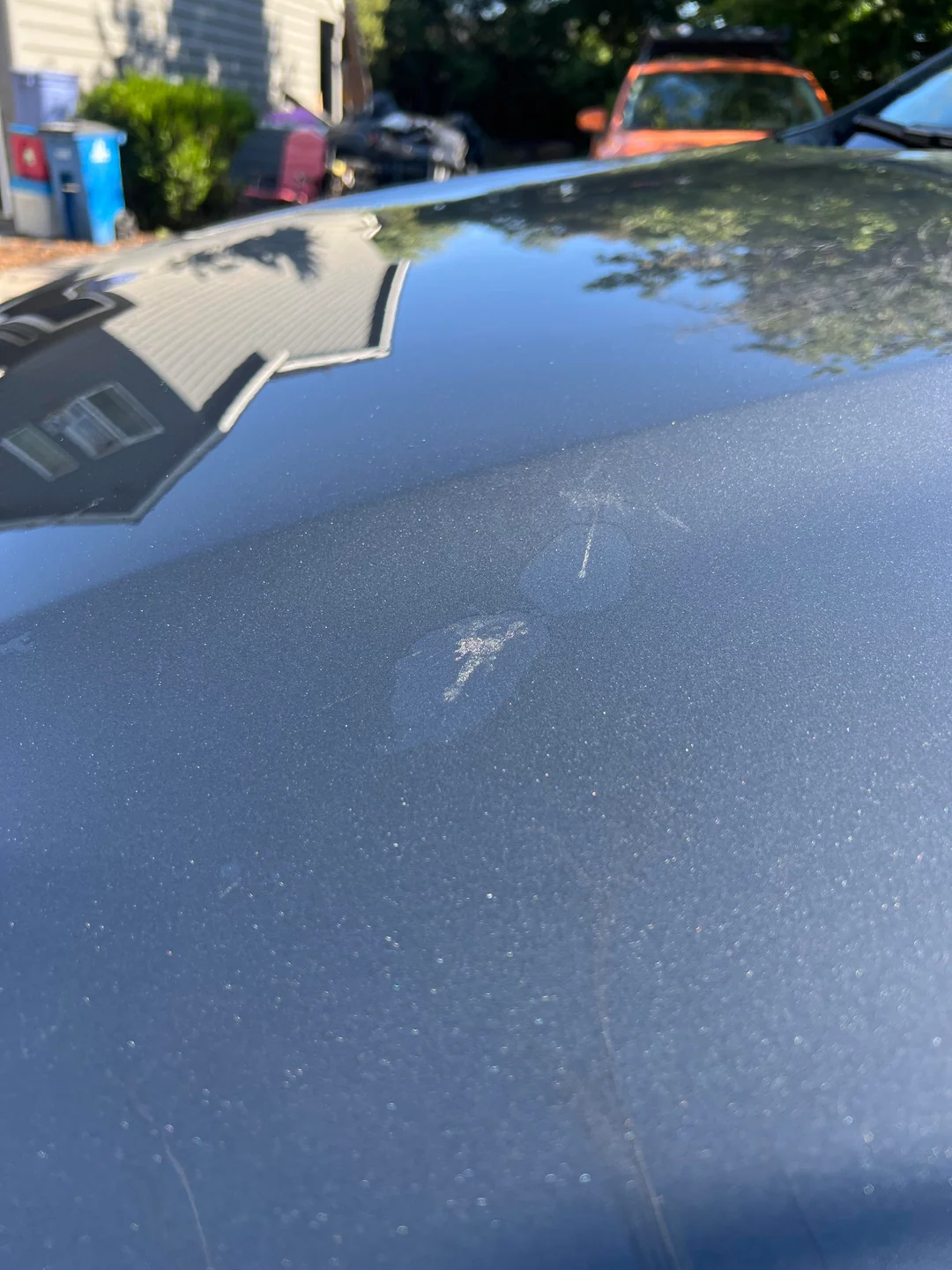
Bird Dropping Damage: Clean Paint Before Etching Occurs
Bird droppings can damage automotive paint faster than many drivers expect, especially when residue dries under direct sunlight. The safest response is early removal using moisture, gentle pressure, and paint-safe products rather than aggressive scrubbing.
Once contamination hardens, forcing it off can create scratches while leaving stains or etched areas behind.
Why Bird Droppings Can Harm Car Paint
Bird waste contains a mixture of organic material that can cling firmly to clear coat. Heat makes the situation worse because the residue dries while the vehicle’s painted surface becomes warm.
As the contamination sits, staining or surface etching may become more noticeable. Fresh deposits are generally easier to remove than material that has spent several hot days on the hood, roof, or trunk.
Heat Can Increase the Problem
A car parked outside can develop considerable surface heat. Dried contamination becomes harder to loosen, making careless removal more likely to damage the finish.
Start by Softening the Deposit
Avoid scraping a dry bird dropping directly from the paint. Instead, place a damp microfiber cloth over the area briefly so moisture can begin loosening the material.
Drivers researching routine exterior maintenance through automotive care resources may encounter many cleaning approaches, but gentle removal remains the safer starting point for stubborn contamination.
Once softened, lift the residue with light passes rather than repeatedly rubbing one spot.
Use Paint-Safe Cleaning Products
A proper car-wash solution or dedicated exterior cleaner can help remove remaining material. Household cleaners aren’t automatically suitable because some can strip protective wax or leave residue.
Broader vehicle ownership information can be useful when comparing maintenance ideas, but any product applied directly to paint should specifically indicate that it is suitable for automotive finishes.
| Condition | Better Approach | Main Risk |
|---|---|---|
| Fresh dropping | Rinse and wipe gently | Smearing residue |
| Dried dropping | Soften before removal | Surface scratching |
| Remaining mark | Inspect after washing | Possible etching |
| Rough contamination | Use proper detailing method | Clear-coat damage |
Check the Paint After Cleaning
Removing the actual contamination doesn’t always remove the visible mark. Wash and dry the area, then inspect it from several angles under good lighting.
Some people browsing general online reading may find quick household remedies, but aggressive chemicals or abrasive pads can turn a small cosmetic problem into permanent clear-coat damage.
Light marks may respond to appropriate paint correction, while deeper etching may require professional assessment.
Mistakes That Can Make Damage Worse
Scraping with fingernails, plastic cards, rough towels, or dry paper products can scratch paint. Another common mistake is rubbing harder because the stain doesn’t disappear immediately.
The visible outline may actually be etching rather than remaining dirt. Once the contamination has been removed, repeated scrubbing won’t necessarily fix that damage and may reduce clear-coat thickness.
Frequently Asked Questions
How quickly should bird droppings be removed from car paint?
Remove them as soon as practical. Fresh contamination usually requires less rubbing and gives residue less time to dry firmly onto the surface, particularly when the vehicle is parked in warm sunlight.
Can bird droppings permanently damage clear coat?
They can leave staining or etched areas when allowed to remain for extended periods. The outcome depends on exposure, heat, paint condition, and how aggressively the residue is later removed.
Should I polish a bird dropping stain?
Polishing may help some superficial marks, but first confirm that all contamination has been removed. Deep etching shouldn’t be attacked repeatedly with abrasive products because excessive correction can thin the clear coat.
Remove Contamination Before It Becomes a Repair
Fast, gentle cleaning is usually easier on paint than dealing with hardened contamination days later. Keep a microfiber cloth and paint-safe quick cleaner available if your vehicle regularly sits outdoors.
If a mark remains after careful washing, inspect it before applying stronger products. Treat bird dropping damage as a contamination problem first and a paint-correction problem only when necessary.